
Recording Artist JNL Font
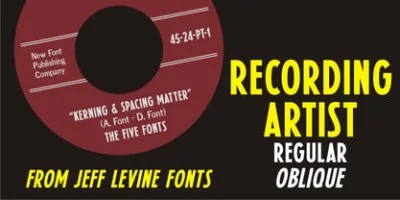
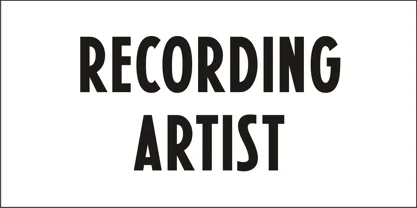
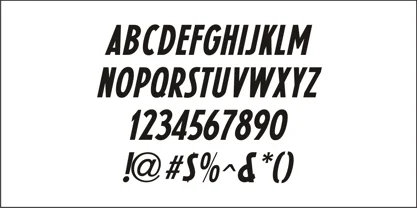
Recording Artist JNL Font
There is a particular satisfaction in finding a typeface that delivers a confident voice that adapts to diverse briefs without compromise. Recording Artist JNL consistently provides it. The typeface brings a versatile sensibility to a broad range of creative disciplines, with visual harmony and precise spacing that holds up whether the work is print-first or screen-first.
In practice, Recording Artist JNL proves particularly effective for annual reports, editorial layouts, brand identity systems, signage systems, social media graphics. Designers reaching for it find that the type decisions feel resolved rather than laboured — a useful quality when client timelines are tight.
The range of applications extends to product labels, advertising campaigns, packaging design, logo design. That breadth is deliberate: the proportions and spacing were stress-tested across a wide range of mock briefs before the typeface was finalised.
The proportions balance x-height, cap height, and ascender length to produce a face that reads confidently at body copy sizes without losing presence at display scale. Sidebearings were derived from visual rhythm testing rather than mathematical calculation alone.
Brand strategists building visual languages find Recording Artist JNL a reliable choice for projects that demand both personality and restraint. The design avoids the self-conscious quirkiness that dates quickly, settling instead for considered distinctiveness that holds up over time.
Both OTF and TTF files are included in the. Use OTF in professional applications such as Adobe Illustrator, InDesign, or Affinity Publisher, where OpenType features — ligatures, alternates, and kerning tables — are accessible. TTF is the better choice for web embedding and older desktop environments where OTF support is limited.
Get Recording Artist JNL as a. Install it, test it against your current project, and keep it if it fits — there is no cost and no registration required.